
This is not a rare operational mishap. It is one of the most common and costly consequences of poor equipment visibility.
In equipment storage, rental, and logistics businesses, assets that are physically present often remain commercially invisible. They sit idle while demand exists elsewhere in the operation. The result is lost revenue, frustrated customers, and teams spending more time reconstructing status than moving equipment.
When Physical Presence and Commercial Availability Drift Apart
Most operators track utilization as a core metric. Industry benchmarks place healthy time utilization in the 65–75% range for most equipment categories. Falling below that range signals underused capital. Rising above it often means lost bookings because equipment cannot be confirmed in time.
The deeper problem is that many businesses cannot accurately see utilization in the first place. When location, status, and project association are not connected in real time, an asset can return to the yard, complete its inspection, and still remain marked unavailable, or simply invisible, for hours or days.
Industry research shows how widespread the underlying issue remains. Only 16% of rental operators have fully integrated systems. The majority still work with partially connected tools that require manual updates, and most manage three to four separate platforms. Seven out of ten report losing meaningful time to these inefficiencies.
In practical terms, the lag between physical reality and system status is where revenue quietly disappears.
A Pattern That Repeats Across the Operation
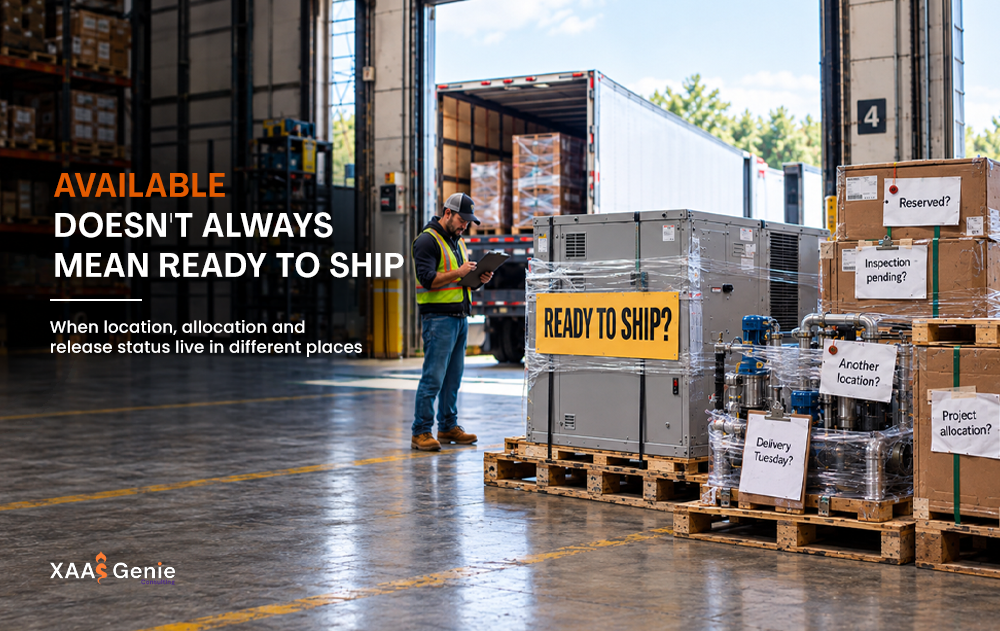
A piece of equipment returns from a project on Friday. It is placed in the correct bay. The paperwork is delayed. The system still shows it as deployed. Over the weekend, another customer requests the same category of equipment. The team checks available inventory, sees nothing matching, and declines the request or arranges a higher-cost sub-rental.
On Monday the unit is finally updated. The opportunity has already passed.
The same sequence appears in pure rental businesses. A unit comes off rent. It is physically present but not yet marked ready. Maintenance status is unclear. Demand exists at another location or through another channel. Without a single reliable view, the equipment remains idle while a customer is told to wait or look elsewhere.
In both cases the root cause is the same: context does not travel with the asset. Location, status, and availability live in different places. People are left to reconstruct the picture after the fact.
The Real Cost of Idle but Invisible Assets
On a fleet valued at $1 million, a sustained 10-percentage-point gap in utilization can represent a substantial annual revenue shortfall, an illustrative figure that varies by equipment category and rates, but one that underscores the scale of the opportunity. Beyond the revenue itself sit secondary costs: sub-rental expenses incurred to cover commitments, overtime spent locating equipment, and the gradual erosion of customer confidence when availability answers prove incomplete.
More than half of rental businesses report losing revenue linked to equipment downtime. When status lags behind reality, that leakage becomes structural rather than occasional.
Why Process Discipline Alone Stops Working
Many operations try to close the gap with tighter procedures: update the spreadsheet immediately, call the yard before confirming, hold a daily status meeting. These measures can reduce errors in the short term. They do not scale.
As volume increases: more projects, more facilities, higher turnover, the lag between physical movement and digital status widens. The probability that an asset remains invisible for a commercially meaningful period rises. Adding more people to perform the same reconciliation simply raises the cost of the workaround. The architecture problem remains: information about location and status does not move with the equipment.
What Changes When Visibility Catches Up
Operations that close the visibility gap reverse the pattern.
When an asset returns to the yard, its location and status update in the same operational view that the rental desk, warehouse team, and leadership use. Project association is clear. Pending releases are visible. Availability is no longer a matter of who last checked the spreadsheet.
The same unit that previously sat idle while a customer waited can now be identified and committed in minutes rather than hours. Dispatch decisions become faster because the full picture is already present. Leadership can see occupancy and exceptions without requesting reports. Customers receive confident answers instead of delayed callbacks.
The shift is not primarily about adding more software. It is about ensuring that the critical nodes in the operating chain share context so that physical presence and commercial availability remain aligned.
The Question That Matters
The next time a customer is told equipment is unavailable, one internal question is worth asking:
Is the equipment actually unavailable, or does the operation simply not know that it is available?
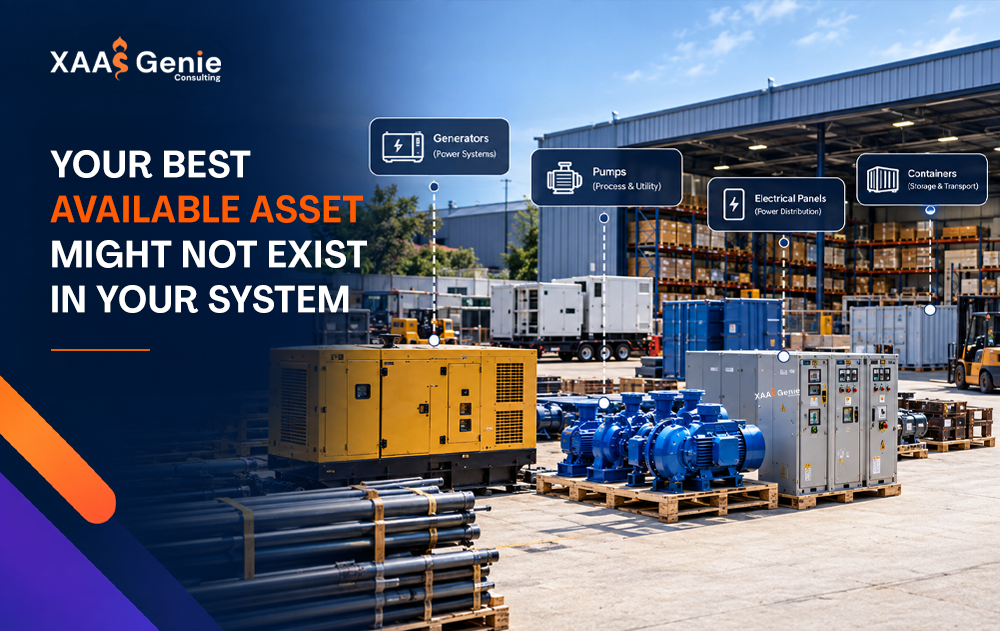
In too many yards and warehouses, the answer is the latter. The asset is present. The demand exists. The only missing piece is reliable visibility that keeps physical presence and commercial availability aligned.
Until that connection is made, idle assets will continue to cost more than they should, in lost revenue, in wasted capacity, and in customers who leave because the answer took too long or turned out to be incomplete.