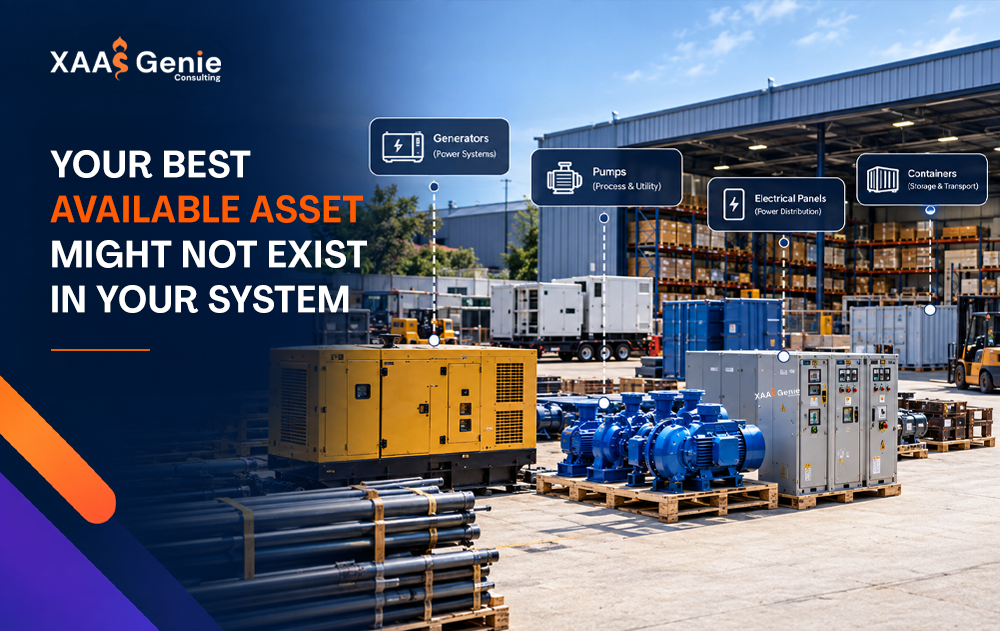

As project volume increased, operational complexity grew faster than visibility. What once worked through manual coordination, shared spreadsheets, and disconnected financial tools began to strain. Teams still delivered. However, leadership and clients no longer had a clear, real-time picture of where equipment was stored, which project it belonged to, or whether it was ready for release.
The risk was not in the core service.
It was in lost visibility, constant reconciliation, and the growing number of status questions that required a phone call or a walk through the warehouse.
The Familiar Friction of Growth
The pattern is common across equipment storage, rental, and logistics businesses in the US. Early on, people and spreadsheets keep the picture intact. Everyone still knows roughly where things are. Answers come relatively quickly.
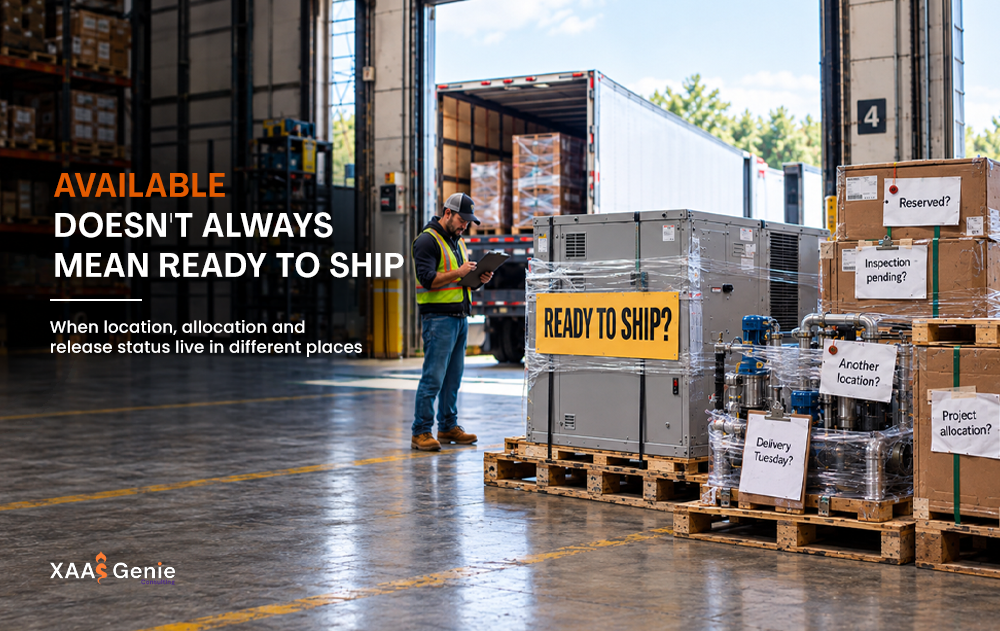
Then volume rises. More projects run in parallel. Assets move between sites. Customer-owned equipment mixes with company inventory. Release requests arrive faster. The same questions start taking longer to answer:
- Where is this unit right now?
- Which project does it belong to?
- Has the customer requested release?
- Is it available, or is it already committed?
- Has it actually been dispatched?
Each question was answerable. None of them was answerable from a single, reliable place. Customer and financial records sat in one system. Warehouse activity lived elsewhere. Movement history was partial. Release requests still required follow-up. Teams spent part of every day cross-checking sheets, messages, and verbal updates to reconstruct status.
Industry data shows how widespread this fragmentation remains. Only a small minority of rental and logistics operators have fully integrated systems. Most still work with partially connected tools and manual hand-offs. The result is predictable: utilization suffers, response times stretch, and leadership loses the ability to see the operation without asking someone.
For this Midwest provider, the friction had become structural. Strong execution on the ground was no longer translating into clear operational control at scale.
Connecting the Operating Chain
The decision was not to replace everything or to add another standalone application on top of the existing stack. The focus was narrower and more architectural: connect the pieces that already mattered so that context could travel with the equipment.
The full sequence most operations actually run looks like this:
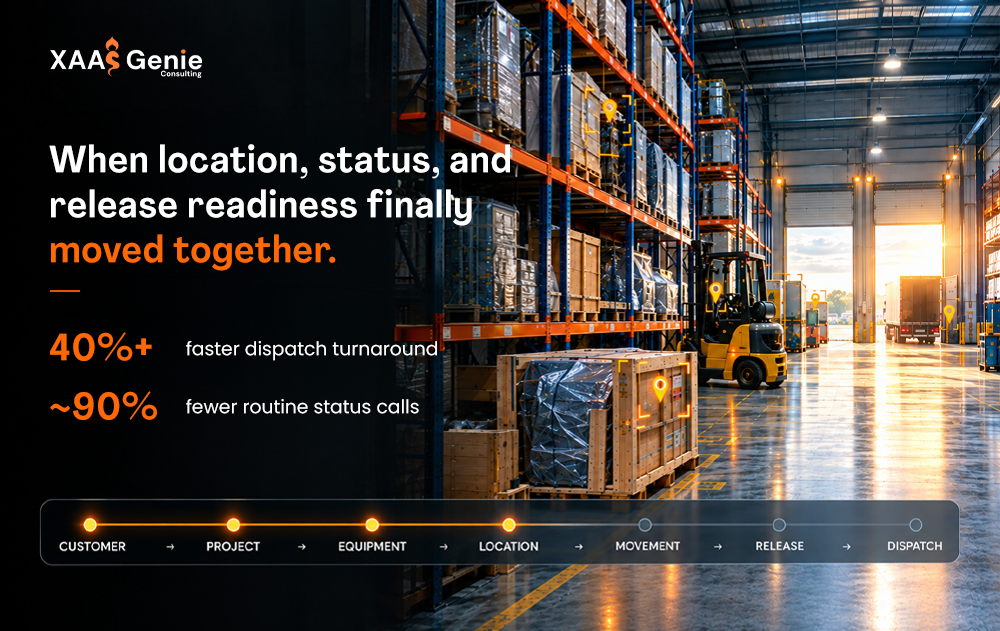
Customer → Project → Equipment → Location → Movement → Release → Dispatch → Billing
Previously, each step held information in isolation. The gaps between them were filled by people. The work was to close those gaps so that location, status, project association, and release readiness became visible in the same operational view.
Customer master records and relevant sales information were synchronized with warehouse activity. Equipment was tracked by project, unique item, facility, and storage location. Inbound receipts and internal movements created a continuous audit trail. Release requests moved from informal follow-ups into structured workflows. Dispatch decisions could draw on the same data that warehouse and customer-facing teams were already using.
A secure customer portal gave clients the ability to see their own project inventory and release status without calling. Leadership gained a real-time view of occupancy, pending releases, and exceptions instead of waiting for compiled reports.
The goal was not to digitize every individual task in isolation. It was to make the operating chain itself connected.
What Changed in Practice
The shift from manual coordination to a system-led operating layer produced clear, measurable results.
Dispatch turnaround improved by more than 40%. Release requests no longer waited on sequential phone calls and status checks. The necessary context was already present, so approvals and preparation moved faster.
Routine customer status calls fell by nearly 90%. Clients could see their equipment, project inventory, and release status directly. The volume of “Where is my equipment?” and “Has it been released yet?” inquiries dropped dramatically. Internal capacity that had been spent answering the same questions was freed for higher-value work.
Inventory accuracy improved across warehouse zones because location and movement were recorded systematically rather than reconstructed later. Manual reconciliation between systems and teams declined significantly. Leadership no longer needed to assemble a picture of the operation from multiple partial sources.
The business did not change how it delivered its core mechanical and logistics expertise. It changed how reliably the operation could be seen and controlled as volume continued to grow.
Why the Results Matter Beyond One Operation
These outcomes are not primarily a story about software. They are a story about what happens when visibility catches up with scale.
When location, status, and project association remain fragmented, assets sit idle while demand exists elsewhere. Availability answers take longer than the commercial window allows. Customers wait or look elsewhere. Teams absorb the friction by becoming the informal integration layer between systems.
When the same information is connected and current, the opposite occurs. Equipment that is physically present becomes commercially visible. Release and dispatch decisions accelerate because the required context is already there. Customers receive confident answers instead of delayed callbacks. Leadership can manage utilization and exceptions from a single operational view rather than by asking.
Industry benchmarks place healthy equipment utilization in the mid-to-high 60s percent range for many categories. Closing the visibility gap is one of the practical ways operators move toward those levels instead of leaving revenue on the floor through delayed status and incomplete availability information.
The Broader Lesson
Many equipment-intensive businesses reach a point where most individual processes are already digital, yet the overall operation still feels manual. That is the signal that digitization of steps has outpaced connection of the chain.
The Midwest provider’s experience illustrates the difference. The constraint was never a lack of effort or a lack of systems. It was the absence of a shared operational context that allowed information to move with the physical asset from inbound receipt through final release and billing.
Once that context existed, the measurable improvements followed: faster dispatch, far fewer routine status calls, higher inventory accuracy, and reduced reconciliation overhead. The operation became more controllable without requiring the team to reinvent how they worked.
The practical question for any growing equipment storage, rental, or logistics business is the same one this provider eventually answered:
When a status or availability question arises, does the answer already exist in the operating view, or does someone still have to go and find it?
If the second is true, the visibility gap is still open. As volume continues to rise, the cost of leaving it open compounds.