
Zoholics India 2026 | Ecosystem Field Notes | Part 3
Our first takeaway from Zoholics India 2026 asked where business value moves as technology becomes easier to build. Our second explored the gaps customers still experience between their systems. The partner conversation adds a commercial question: is the proposition we take to market keeping pace with what customers now expect?
At Chennai, conversations with fellow partners and industry voices pointed toward a growing emphasis on industry understanding, connected processes, practical AI and adoption. Zoho’s direction reinforced those themes.
Our reading is that the market is raising the standard for both platform vendors and the partners around them. Customers need to understand how the investment will improve the business, how soon value can emerge and whether their people will use what has been delivered.
The brief is changing faster than the proposition
A customer can ask for CRM and still be describing a problem that crosses sales, fulfilment and finance. They can ask for AI while the underlying requirement is a faster, more reliable answer. The product named in the brief is often only the starting point.
That changes the conversation a provider needs to have. Which process is holding the business back? Where does information lose context? Which exception sends people back to email, spreadsheets or an informal workaround?
When those questions are unresolved, a broader feature list gives the buyer little assurance. The commercial proposition needs to connect the proposed capability to a change the customer can recognise in their working day.
Platforms are moving closer to the business
The industry focus, connected architecture and AI direction highlighted at Zoholics suggest a platform becoming more aware of the work around an individual application. Cross-application context and action can change how users find information and complete tasks. Industry capability can bring familiar workflows closer to the standard offering.
For SaaS vendors, we see an opportunity to make that relevance clearer: how does the platform help a particular business operate, and what does a user gain from its connected design?
For partners, the implication is equally important. As standard capability expands, the boundary between configuration, industry functionality and custom development needs to be reconsidered. Recommending what the platform can already do well is part of the expertise the customer is paying for.
The partner opportunity moves with it
Implementation skill remains essential. But our reading of the partner conversation is that its value grows when it is supported by domain knowledge, process design and an understanding of adoption.
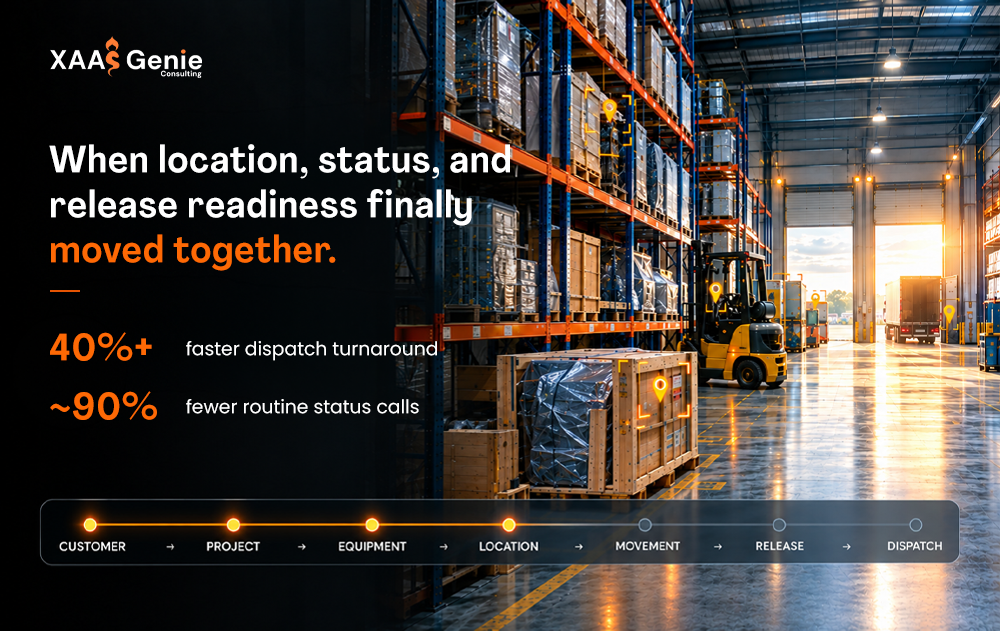
Consider a hypothetical distributor. Sales, inventory, finance and dispatch may each have a functioning application. An order can still stall because availability is unclear, payment status arrives late or nobody owns the exception. The useful intervention starts with understanding that sequence and the decisions within it.
A partner needs to establish which record is authoritative, how context travels between teams and where someone must intervene. That work makes platform capability useful. Its impact can be assessed through cycle time, manual touches and unresolved exceptions.
AI makes trust part of the proposition
When AI moves from helping someone interpret information toward participating in a task, the customer’s questions become more demanding. Which data is it using? What is it permitted to change? When does a person take over? Can the result be understood and corrected?
These are delivery questions for vendors and partners alike. Reliable data, clear permissions and well-designed handoffs determine how confidently the capability can be used.
We see practical value in addressing those foundations early. A responsible recommendation may be to resolve conflicting records or clarify process ownership before expanding the role of an agent.
Faster value requires a sharper first step
The demand for earlier value makes sequencing more important. A first phase should address a meaningful constraint, establish a baseline and deliver an improvement people can use. Wider transformation can then build on evidence from that change.
Industry knowledge and reusable components can help where they fit the requirement. Adoption still needs deliberate attention: clear responsibilities, practical guidance and feedback from users handling the real exceptions.
For the provider, this creates a more credible promise. The customer can see what should improve first and how progress will be assessed.
A global platform still needs local understanding
As a Zoho platform partner working across markets, XAAS Genie sees this shift as a reason to deepen our understanding of each customer’s operating reality. A common platform creates possibilities; industry needs, local practices and the way people work determine which possibilities matter.
Our role is to identify the constraint, use standard capability intelligently, connect the operation and measure whether the improvement holds. Custom development and AI need to earn their place through the requirement they address.
That is the opportunity we take from Chennai: helping customers turn expanding technology capability into connected, usable business value.
For fellow partners and SaaS vendors, the question continues. How is the changing customer brief reshaping your proposition?
Related reading